Welcome to Our Law Firm
Mon - Sat 08:00 - 08:00

BY- Admin
June 18, 2026
Comment(0)
Your Nikah Nama is one of the most important legal documents of your life. It is the official record of your Islamic marriage under Pakistani law — and without it properly registered, you and your family can face serious legal complications for years to come.
For overseas Pakistanis, an unregistered or incorrectly registered Nikah Nama can cause problems with spousal visas, children’s nationality, inheritance rights, school admissions abroad, NADRA documentation, and much more. For Pakistanis living in Pakistan, an unregistered marriage can affect property rights, divorce proceedings, custody cases, and countless other legal matters.
Similarly, family registration issues — such as children not being registered on the family tree, incorrect entries in NADRA records, or unregistered births and deaths — are extremely common and can create legal headaches that take years to untangle if not addressed promptly.
This comprehensive step-by-step guide by our Islamabad-based law firm covers everything you need to know about Nikah Nama registration, common family registration problems, and how to fix them — whether you are in Pakistan or living abroad.
The Nikah Nama (also called the Marriage Contract or Marriage Certificate) is the official written contract of a Muslim marriage in Pakistan. It is a legally binding document that records:
Nikah Nama registration in Pakistan is governed by:
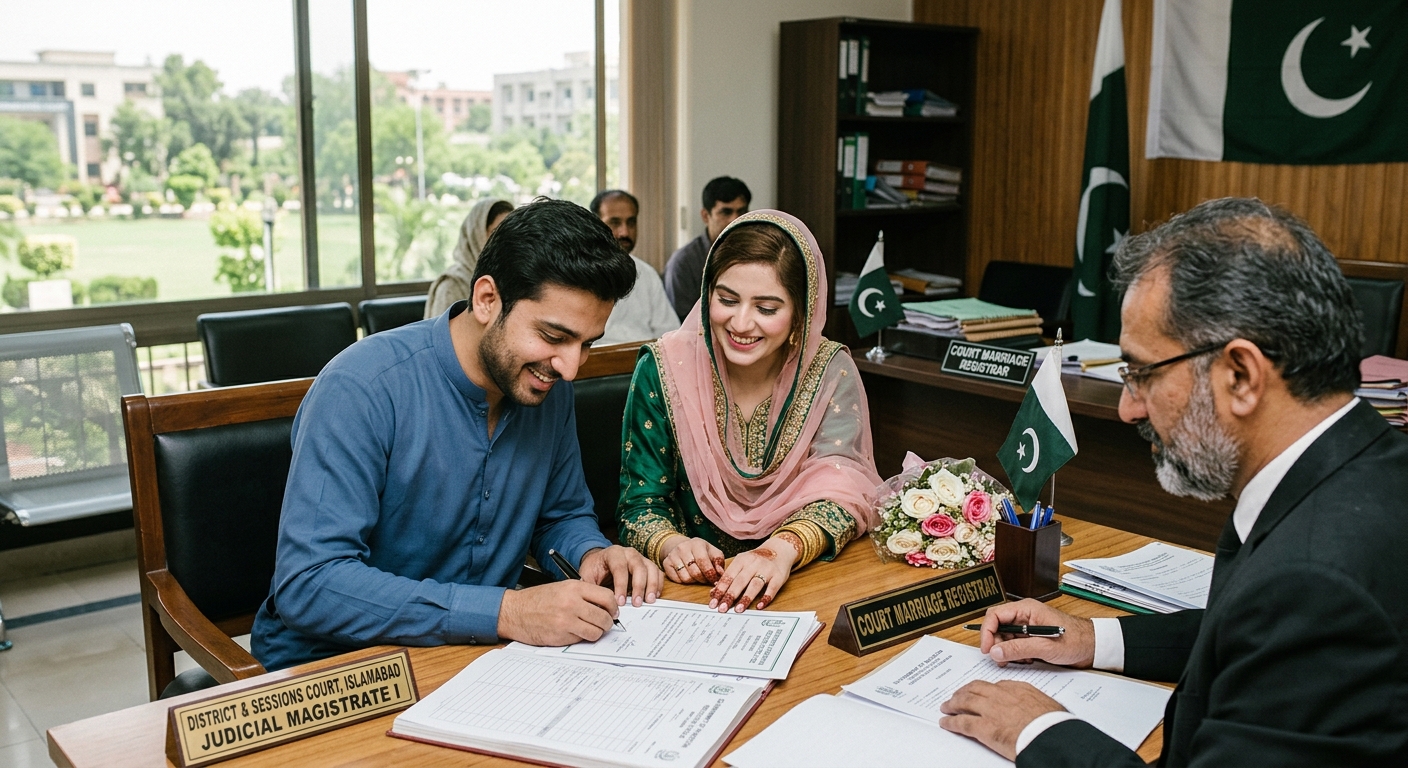
Yes. Under Section 5 of the Muslim Family Laws Ordinance, 1961, every Muslim marriage in Pakistan must be registered with the Union Council of the area where the marriage took place. The Nikah Registrar (the cleric who performs the Nikah) is legally obligated to register the marriage within 15 days.
Failure to register is a punishable offence — the Nikah Registrar can be fined or imprisoned for non-compliance. However, an unregistered marriage is still legally valid under Islamic law — it simply lacks official documentation, which causes practical and legal problems.
The first and most important step is ensuring that the Nikah ceremony is performed by or in the presence of a government-licensed Nikah Registrar (Nikah Khawan).
Tip for overseas Pakistanis: If you are marrying in Pakistan while on a visit, always confirm beforehand that the cleric performing your Nikah is a licensed Union Council Nikah Registrar. Ask to see their license.
At the time of the Nikah, the Nikah Registrar will complete the Nikah Nama Form in triplicate, which includes:
Each party — the bride, the groom, and the Union Council — receives one copy.
Important: Both the bride and groom should carefully read all entries in the Nikah Nama before signing. Errors in names, CNIC numbers, or Haq Mehr amounts can cause serious problems later and are difficult to correct after the fact.
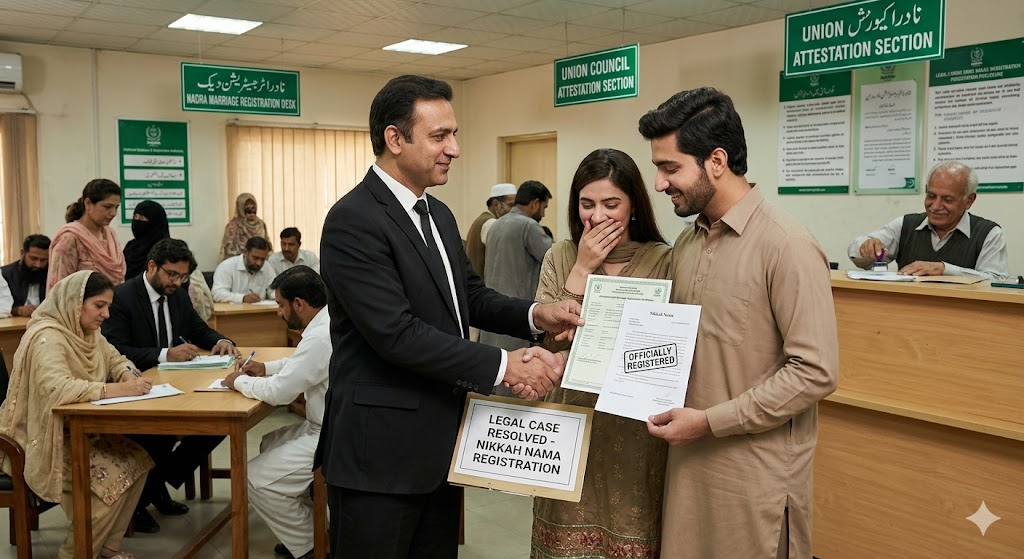
Within 15 days of the marriage, the Nikah Registrar must submit the Nikah Nama to the relevant Union Council for official registration and entry into the Marriage Register.
The Union Council will:
The Union Council stamp and registration number on the Nikah Nama is what makes it officially registered.
Once registered, you should obtain at least two to three certified copies of the Nikah Nama from the Union Council. These are essential for:
For overseas Pakistanis: Certified copies of your Nikah Nama should be attested by NADRA and then by the Ministry of Foreign Affairs (MOFA) in Pakistan if they are to be used abroad. If required by a foreign country, they may also need to be apostilled or attested by the relevant foreign Embassy in Islamabad.
After the Nikah Nama is registered at the Union Council, you must update your NADRA Family Registration Certificate (FRC) to reflect the marriage.
To update your NADRA record:
For overseas Pakistanis: The NADRA update can often be initiated through Pakistani Embassies and Consulates abroad, or through an authorised representative in Pakistan using a Power of Attorney.
One of the most common problems our law firm handles is the late registration of a Nikah that was never officially registered at the time of marriage. This happens frequently when:
Yes, it can — but it requires a legal process. Here is how:
To register an old, unregistered Nikah, you will need to gather evidence proving the marriage took place. This may include:
With the evidence gathered, your lawyer will approach the relevant Union Council where the Nikah originally took place.
If the Union Council refuses late registration, or if the marriage took place many years ago and evidence is limited, your lawyer will file a Declaration Suit in the Family Court.
In this suit, the court will:
A court declaration of marriage is a powerful legal document, fully recognised by NADRA and all government institutions.
Once the Nikah is registered (either through the Union Council or by court order), the same NADRA update process described in Part Two applies. Your family tree record will be updated to reflect the officially registered marriage.
If a Pakistani national married abroad — for example, in the UK, USA, UAE, or any other country — the foreign marriage certificate does not automatically satisfy Pakistani law requirements.
To have a foreign marriage recognised in Pakistan:
Note: If the marriage was performed as a Nikah in a mosque or Islamic centre abroad, ensure the officiating imam or cleric provides a written Nikah Nama or marriage certificate that can be attested. Our lawyers can advise on country-specific requirements.
If a Pakistani national has married a foreign national (non-Pakistani), additional documentation is required:
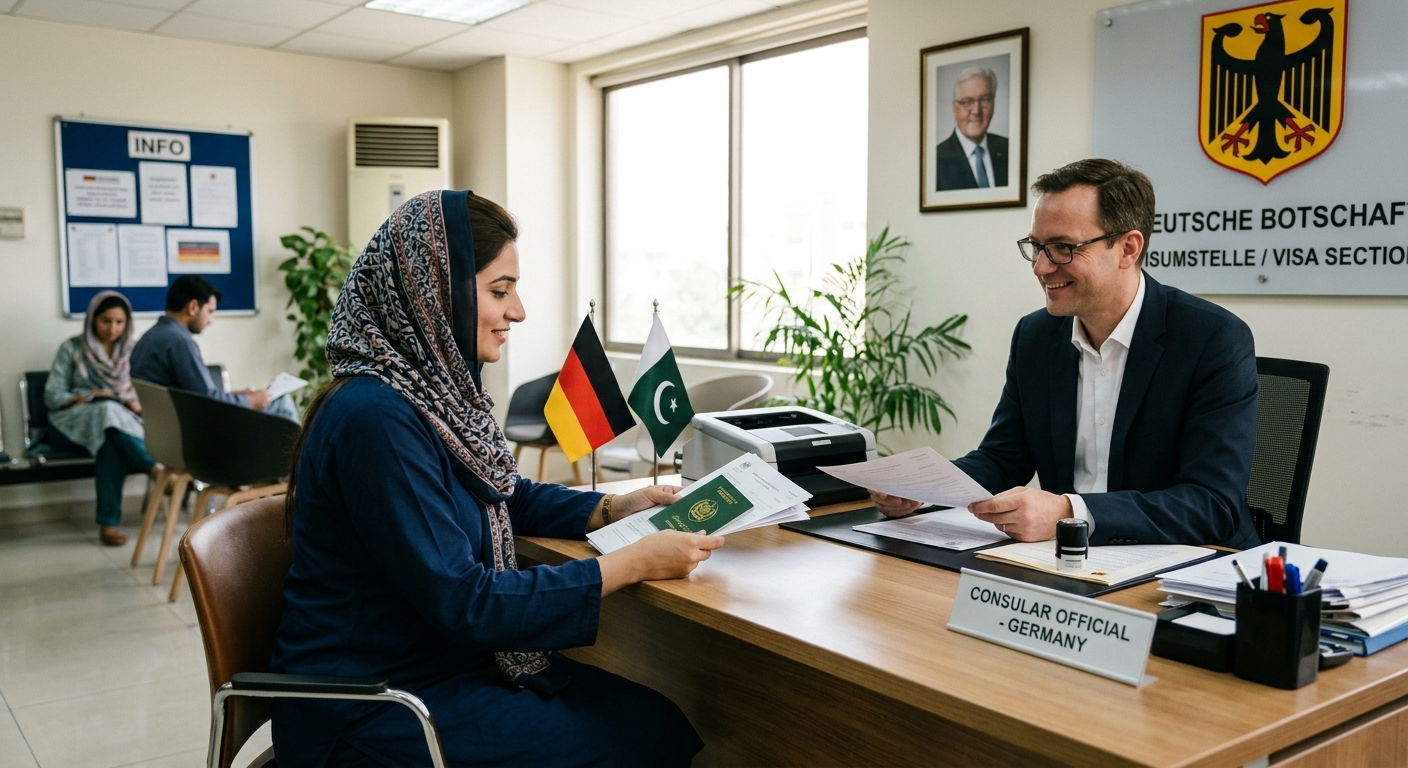
If your Nikah was done in Pakistan but you are now living abroad and need your Nikah Nama for visa, immigration, or other official purposes:
This is one of our most frequently requested services for overseas Pakistani clients — we handle it efficiently and promptly.
Beyond the Nikah Nama, Pakistani families — both at home and abroad — face a wide range of family registration problems with NADRA and Union Councils. Here are the most common ones and how our firm resolves them:
Every child born in Pakistan must be registered with NADRA and issued a B-Form (child registration certificate). This is often delayed or missed, particularly in rural areas or when both parents are abroad.
How to fix it:
For overseas Pakistanis: Children born abroad to Pakistani parents should be registered at the Pakistani Embassy or Consulate in their country of birth. Our lawyers can assist in preparing the necessary documentation from Pakistan’s end.
Errors in CNIC or NADRA records are extremely common and can cause serious issues — particularly when names differ between Pakistani documents and foreign records.
How to fix it:
Under the Muslim Family Laws Ordinance, 1961, a man wishing to contract a second marriage must obtain prior permission from the Arbitration Council of the Union Council. Failure to do so is a punishable offence and the second Nikah may not be registered.
How to fix it:
Many families — particularly those living abroad when a relative dies in Pakistan — struggle with obtaining official Death Certificates. Without a registered death, estate matters, property transfers, and succession certificates cannot proceed.
How to fix it:
If a divorced person wishes to remarry, the new Nikah Nama must correctly reflect their divorced status. Common problems include:
How to fix it:
The Family Registration Certificate (FRC) is a NADRA document showing the complete family tree — parents, spouse, and children — linked to one CNIC. Discrepancies in the FRC are extremely common and include:
How to fix it:
For overseas Pakistanis, simply having a registered document is often not enough. Foreign governments and institutions require Pakistani documents to be officially authenticated. Here is the process:
Get the document attested by NADRA to verify its authenticity as an official Pakistani record.
Take the NADRA-attested document to the Ministry of Foreign Affairs in Islamabad (or its regional offices) for government-level attestation.
Our law firm handles the entire attestation and apostille process on your behalf. We collect documents, take them through all attestation stages, and courier them to you wherever you are in the world.
| Service | Estimated Timeline |
|---|---|
| Fresh Nikah Nama registration (at time of Nikah) | Same day to 15 days |
| Late registration of old Nikah (Union Council) | 1 to 4 weeks |
| Court declaration of marriage | 3 to 6 months |
| B-Form / child registration | 1 to 2 weeks |
| NADRA record correction (minor) | 2 to 4 weeks |
| NADRA record correction (major / court order needed) | 2 to 6 months |
| Death certificate (late registration) | 2 to 6 weeks |
| Full MOFA attestation and apostille | 1 to 3 weeks |
| Document Needed | Where to Get It |
|---|---|
| Registered Nikah Nama copy | Union Council where marriage was registered |
| Family Registration Certificate (FRC) | NADRA office or online portal |
| B-Form (child registration) | NADRA |
| Birth Certificate | Union Council / Hospital |
| Death Certificate | Union Council |
| Divorce Certificate | Union Council (after Iddat period) |
| NADRA Attestation | NADRA headquarters or regional offices |
| MOFA Attestation | Ministry of Foreign Affairs, Islamabad |
Q: My Nikah was done 10 years ago but was never registered. Can we still register it? Yes. Late registration is possible through the Union Council with supporting evidence. If the Union Council refuses, a court declaration of the marriage can be obtained. Contact our lawyers — we handle this regularly.
Q: We got married in Dubai. Is our marriage recognised in Pakistan? A foreign marriage between Pakistani nationals is recognised in Pakistan, but you must have the foreign marriage certificate attested by the Pakistani Embassy in Dubai and then by MOFA in Pakistan, followed by NADRA registration. Our firm handles this entire process.
Q: My husband’s name is spelled differently on the Nikah Nama and his CNIC. Will this cause problems? Yes, it can — particularly for visa applications and inheritance matters. This should be corrected as soon as possible. Our lawyers can guide you through the NADRA correction process.
Q: Can a woman’s conditions in the Nikah Nama (such as the right to divorce) be enforced? Absolutely. Any conditions written into the Nikah Nama by either party are legally binding and enforceable by a Pakistani Family Court. This is why carefully reading and negotiating the Nikah Nama terms at the time of marriage is so important.
Q: My father passed away years ago but his death was never officially registered. How do I proceed with inheritance matters? We can assist with late registration of the death at the Union Council, followed by a court-issued Succession Certificate which allows you to claim the deceased’s assets and property. Contact us for a full consultation.
Q: I am in the UK and need my Nikah Nama attested urgently for a visa application. How long will it take? We can typically complete NADRA and MOFA attestation within 1 to 2 weeks and courier the documents to you in the UK. Contact us immediately and we will prioritise your case.
Q: Can I appoint your firm to handle all of this while I am abroad? Yes. Through a properly executed Power of Attorney, our lawyers can handle every step — from obtaining documents from Union Councils and NADRA to attestation and courier — entirely on your behalf.
At [Your Law Firm Name], based in Islamabad, we have helped hundreds of Pakistani families — both at home and abroad — resolve Nikah Nama registration and family documentation issues quickly, correctly, and without the stress of navigating government offices alone.
Do not let documentation problems hold up your visa, your legal case, or your family’s future. Whether your Nikah Nama was never registered, your child’s B-Form is missing, or you need attested documents urgently for use abroad — we are here to help.
Jamali Law Firm, Pakistan Phone: +92-3336676824 Email: info@yourlawfirm.com.pk Website: www.yourlawfirm.com.pk WhatsApp consultations available — 7 days a week
Confidential | Efficient | Trusted
Disclaimer: This blog is intended for general informational purposes only and does not constitute legal advice. Documentation requirements may vary based on individual circumstances, province, and Union Council. Please contact our office for advice specific to your situation.