Welcome to Our Law Firm
Mon - Sat 08:00 - 08:00

BY- Admin
July 10, 2026
Comment(0)
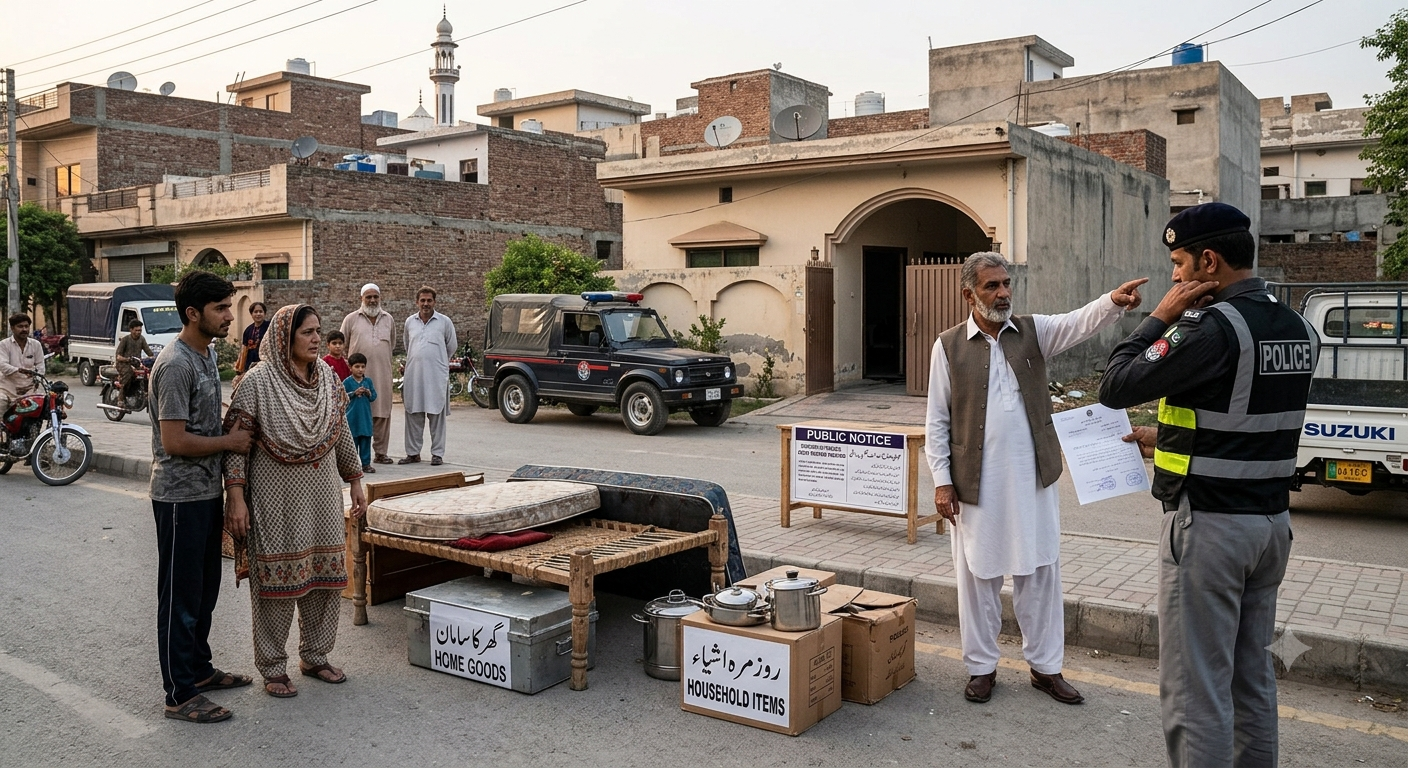
Understanding the eviction process in Pakistan is essential for landlords seeking to recover possession of their property, and equally important for tenants who want to know their rights before agreeing to vacate — or before resisting an eviction attempt. This guide covers the tenant eviction rules in Pakistan, the recognised grounds for eviction under Pakistani law, what constitutes illegal eviction in Pakistan, how to evict a tenant legally, and what happens when a tenant is refusing to vacate despite a valid order.
Eviction is governed by provincial rent legislation, not a single federal law:
Disputes are decided by the Rent Controller (Islamabad, Sindh, KP, Balochistan) or Rent Tribunal (Punjab), not the ordinary civil courts. Filing before the wrong forum can be fatal to an eviction case, as seen in Jamil Ahmad v. Additional District Judge, Islamabad (2003 YLR 1894), where a jurisdictional defect derailed otherwise valid proceedings.
Every province recognises broadly similar grounds for eviction, though the exact wording varies. The most common statutory grounds are:
Courts have confirmed that a landlord may rely on multiple grounds together — for example, personal need combined with lease expiry — provided each is genuine and can be substantiated (2010 YLR 1490). Informal arrangements such as pagri (key money) or advance rent payments do not exempt a landlord from following the formal eviction process (2005 MLD 1493).
For landlords asking how to evict a tenant legally in Pakistan, the process generally follows these steps:
Identify the specific statutory ground(s) for eviction and gather supporting evidence — rent ledgers, written notices, photographs of damage, or documentation of unauthorised subletting.
Issue a written notice to the tenant stating the ground(s) for eviction and a deadline to vacate or remedy the breach (commonly 30–90 days, depending on the province and the tenancy agreement). Defective or improperly served notices are one of the most common reasons eviction petitions fail.
Submit the eviction application to the Rent Controller (or Rent Tribunal in Punjab) with jurisdiction over the property’s location, supported by the landlord’s affidavit and, where required, affidavits of up to two witnesses.
In Punjab, the tenant must seek “leave to contest” under Section 22 of the Punjab Rented Premises Act, 2009, which the Tribunal must decide within fifteen days. Leave is only granted if the tenant’s reply discloses sufficient grounds for recording oral evidence; otherwise, the Tribunal proceeds directly to a final order.
The Tribunal or Controller may direct the tenant to continue depositing rent throughout the litigation (Section 24, Punjab Rented Premises Act, 2009), protecting the landlord’s income while the case is pending.
If the petition succeeds, the Controller/Tribunal issues a formal eviction order specifying the timeframe for the tenant to vacate.
If the tenant does not vacate voluntarily, the landlord applies for execution of the order, at which point the Controller/Tribunal can direct that possession be delivered — using force through the appropriate legal officer, if necessary — but only pursuant to the court/Tribunal’s own process, never by the landlord acting independently.
Either party generally has a right of appeal to the District Court or High Court, depending on the applicable provincial statute, so landlords should be prepared for the possibility of a contested case extending beyond the first-instance order.
Illegal eviction in Pakistan refers to any attempt to remove a tenant, or interfere with their possession, without following the statutory process. This includes:
A tenant subjected to illegal eviction can apply to the Rent Controller/Tribunal for restoration of possession and, in appropriate cases, compensation. Courts have also imposed a check on vexatious or frivolous eviction applications: under the Sindh Rented Premises Ordinance, 1979, a Controller who finds an eviction application frivolous or vexatious may award compensation of up to ten times the monthly rent to the tenant; the Islamabad Rent Restriction Ordinance, 2001 similarly allows compensation of PKR 5,000–10,000 against a party found guilty of abusing the process through frivolous or vexatious filings or false pleas.
The core tenant eviction rules in Pakistan that apply regardless of province:
It is common for a tenant refusing to vacate to remain in possession even after a lease has expired or an eviction order has been passed. Landlords in this situation should:
Equally, a tenant who has valid reasons to remain — for example, a dispute over whether the landlord’s stated ground for eviction is genuine — should raise that defence through the proper “leave to contest” process rather than simply refusing to engage, since ignoring a properly served notice can result in an ex parte order against them.
(Case law continues to evolve; citations should be verified against current reported judgments by qualified counsel before being relied upon in active proceedings.)
For landlords:
For tenants:
The eviction process in Pakistan is designed to balance a landlord’s right to recover possession against a tenant’s right to due process — but it only works when both sides follow it correctly. Landlords must establish a genuine statutory ground, serve proper notice, and pursue the case through the correct Rent Controller or Rent Tribunal; tenants are protected from illegal eviction at every stage, but must actively engage with the legal process rather than simply refusing to vacate.
At Jamali Law Associates, we represent both landlords and tenants in eviction matters — from drafting and serving legal notices, to filing and defending eviction petitions, to pursuing execution where a tenant is refusing to vacate, and to challenging illegal eviction attempts. If you are facing an eviction dispute, our team can guide you through the correct legal process from start to finish.
This article is intended for general informational purposes and does not constitute legal advice. For advice specific to your situation, please consult with a qualified lawyer at Jamali Law Associates.