Welcome to Our Law Firm
Mon - Sat 08:00 - 08:00

BY- Admin
June 18, 2026
Comment(0)
If your marriage has broken down irretrievably and you are seeking a way out, you have every legal and Islamic right to seek Khula — a formal dissolution of your marriage under Pakistani law.
Whether you are living right here in Pakistan — in Islamabad, Lahore, Karachi, Peshawar, or anywhere else — or you are overseas in the UK, USA, Canada, Australia, UAE, Saudi Arabia, or beyond, this guide is written for you.
Many Pakistani women — both at home and abroad — feel trapped in unhappy or abusive marriages simply because they do not fully understand their legal rights or believe the process is too complicated to navigate alone. The truth is: you have a clear, legally protected right to seek Khula, and our law firm is here to guide you through every step.
This comprehensive guide by our Islamabad-based law firm walks you through the entire Khula process — from understanding what it is, to receiving your Decree and Divorce Certificate — in plain, straightforward language.
Khula is a form of divorce in Islamic and Pakistani family law that is initiated by the wife. Unlike Talaq (which is initiated by the husband), Khula gives women the independent right to dissolve a marriage through the courts — even if the husband refuses to grant a divorce.
Under the Muslim Family Laws Ordinance, 1961 and the West Pakistan Family Courts Act, 1964, every Pakistani woman has the full legal right to seek Khula from a Family Court, regardless of whether her husband consents.
In Khula, the wife typically agrees to return her Haq Mehr (dower) to the husband in exchange for the dissolution of the marriage — though courts assess this on a case-by-case basis and may waive or reduce this requirement where the husband was at fault.
Any Pakistani Muslim woman whose marriage has been registered in Pakistan can file for Khula — including:
Khula petitions are filed in the Family Court of the district where:
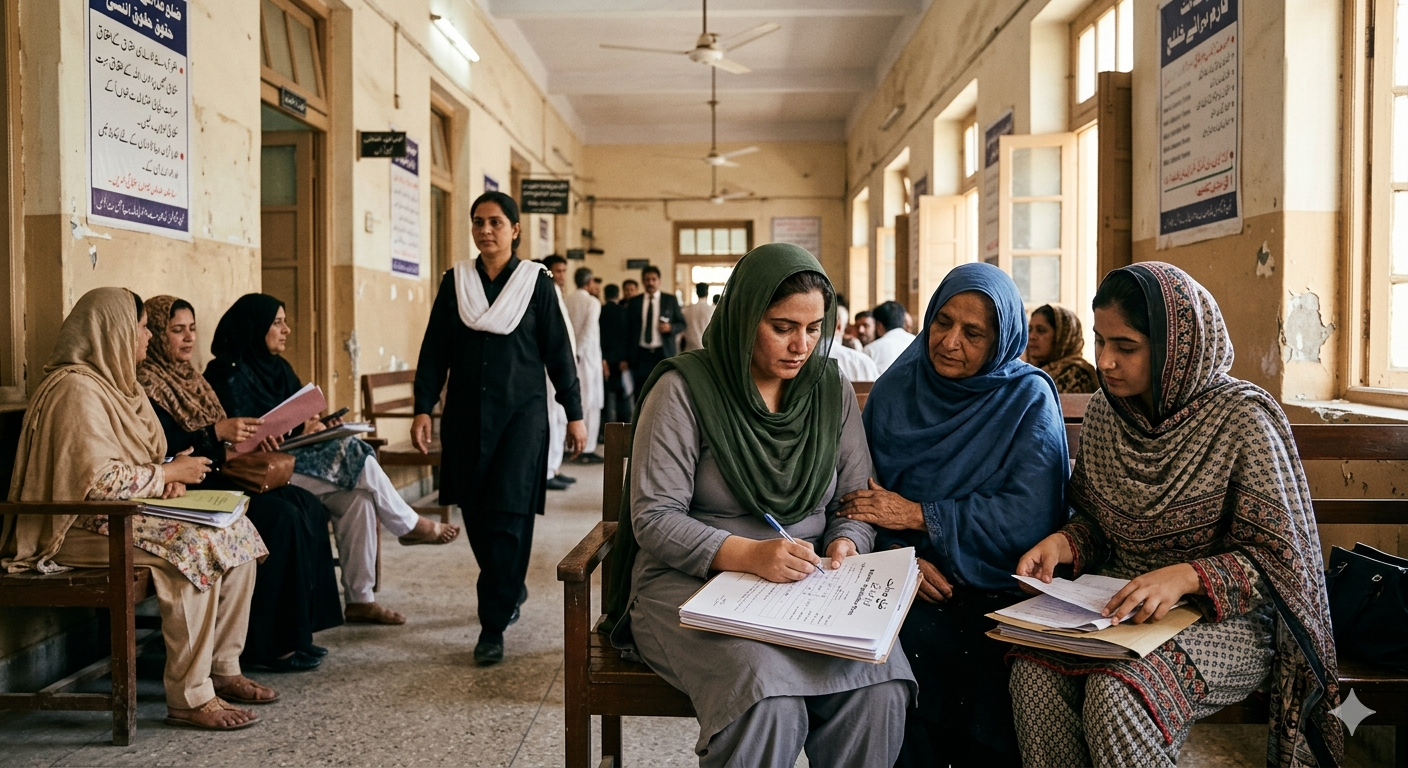
For women living in Pakistan, you will appear before the Family Court in your relevant district. For overseas women, your lawyer handles all appearances on your behalf through a Power of Attorney.
The first and most important step — whether you are in Pakistan or abroad — is to consult a qualified Pakistani family lawyer experienced in Khula and women’s rights cases.
During your consultation, your lawyer will:
For women in Pakistan: Consultations can be done in person at our Islamabad office or by phone.
For overseas women: Consultations are available via WhatsApp, Zoom, or phone call — at a time convenient for your time zone.
Our law firm offers an initial consultation for overseas and local Pakistani women. Contact us today to book your appointment.
Before the Khula petition can be filed, you will need to gather the following documents:
| Document | Details |
|---|---|
| Nikah Nama | Original or certified copy of your Pakistani marriage certificate |
| Your CNIC | Pakistani national identity card (for women in Pakistan) |
| Your NICOP / Passport | For overseas Pakistani women |
| Husband’s CNIC | If available |
| Children’s B-Form / Birth Certificates | If children are involved in the case |
| Any evidence of marriage breakdown | Messages, medical reports, police records showing cruelty, desertion, or non-maintenance (if applicable) |
Tip: If you do not have your original Nikah Nama, your lawyer can retrieve a certified copy directly from the Union Council where your marriage was registered — you do not need to obtain it yourself.
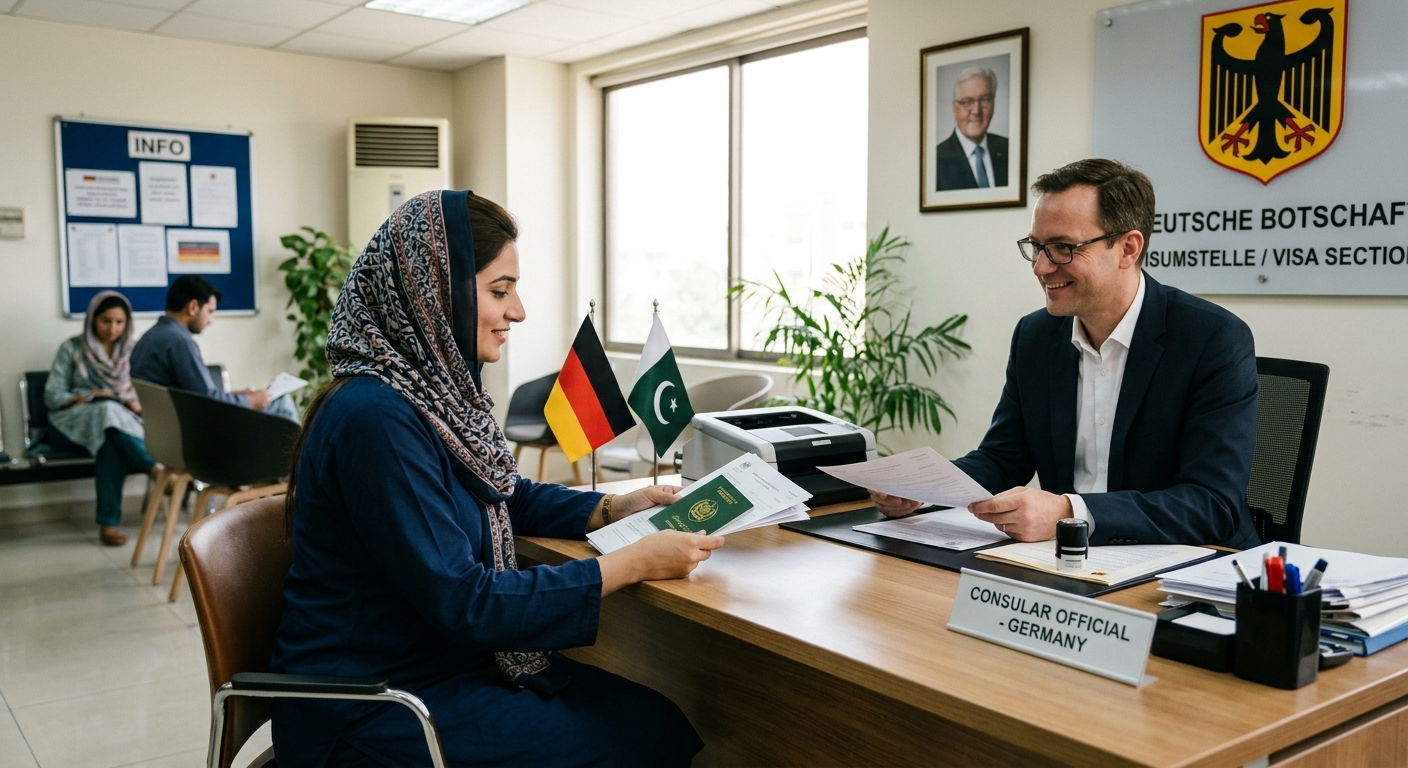
If you are living abroad, you will need to sign a Special Power of Attorney (POA) authorising your lawyer in Pakistan to represent you in court and sign documents on your behalf.
How to execute a POA from abroad:
Book your Embassy appointment early — Pakistani Consulates in the UK, USA, Canada, and Australia often have waiting periods of several weeks.
For women in Pakistan: No POA is needed. You will be represented directly by your lawyer and will attend hearings as required by the court.
Once your lawyer has all the necessary documents (and the attested POA for overseas clients), they will:
For women in Pakistan: You do not need to attend the filing stage yourself — your lawyer handles this. You will be informed of your first hearing date.
For overseas women: Your lawyer files everything on your behalf under the POA with no action required from you at this stage.
The court will formally notify the husband of the Khula petition through service of summons.
What if the husband ignores the summons? If the husband fails to appear after being properly served, the court can proceed ex-parte (without him) and still grant the Khula. His absence does not stop your case.
Under Pakistani law, the Family Court is required to make a formal attempt at reconciliation before proceeding with the Khula. The judge may:
This is a standard procedural step — you are not forced to reconcile. If reconciliation is not possible, which is usually the case when a woman has sincerely filed for Khula, the court proceeds with the case without delay.
For women in Pakistan: You will attend some hearings in person alongside your lawyer, who will guide and represent you throughout. Your presence demonstrates your commitment to the case and is generally viewed positively by the court.
For overseas women: Your lawyer attends all hearings entirely on your behalf under the Power of Attorney. You do not need to be in the courtroom.
During the hearings, your lawyer will:
Grounds commonly accepted by Pakistani courts for Khula include:
Important: Even without specific grounds, Pakistani courts can grant Khula if the wife sincerely states that she cannot live within the bounds of the marriage. The court respects a woman’s genuine desire for dissolution — you do not need to prove wrongdoing to be granted Khula.
In Khula, the wife is traditionally expected to return the Haq Mehr (dower amount) received at the time of marriage. However:
Once the court is satisfied, it issues the Khula Decree — the official court order dissolving your marriage. This is the most important legal document in the entire process.
After the Khula Decree is issued, you must observe the Iddat period — three menstrual cycles (approximately 90 days) — before you can legally remarry. This is a requirement under Islamic law and is embedded in Pakistan’s legal framework.
During the Iddat period, you are still legally entitled to maintenance from your husband if you need it.
After the Khula Decree is issued, your lawyer will:
The Khula Decree (from the court) and the Divorce Certificate (from the Union Council) together are the two documents that fully and officially confirm your divorce under Pakistani law. Both are essential — keep certified copies of each.
Once your divorce is complete, your NADRA and CNIC records should be updated to reflect your new marital status. This is important for:
For women in Pakistan: Visit your nearest NADRA office with your Divorce Certificate and Khula Decree to update your records.
For overseas women: Your lawyer can initiate this process in Pakistan on your behalf, or you can update your NICOP through the Pakistani Embassy in your country of residence.
| Scenario | Estimated Timeline |
|---|---|
| Husband consents to Khula | 3 to 6 months |
| Husband does not appear — ex-parte proceedings | 6 to 9 months |
| Husband contests the Khula | 1 to 2 years |
Timelines vary depending on the court’s schedule, the district, and whether the case is contested. Our lawyers work diligently to move every case forward as efficiently as possible, attending every hearing and following up proactively with the court.
For women in Pakistan: You will be required to attend some hearings — particularly the key evidentiary hearings. Your lawyer will accompany and represent you at every step, making the process as straightforward as possible.
For overseas women: In most cases, NO — your lawyer handles everything through the Power of Attorney. In some contested cases, the judge may request your presence; your lawyer will advise you well in advance and explore alternatives such as giving evidence via video link.
If you have children, custody and maintenance matters can be filed alongside or after the Khula petition — for both local and overseas clients. Under Pakistani law:
Our firm handles custody and maintenance cases for both local and overseas Pakistani families. Read our detailed blog on Child Custody and Guardianship for a complete guide.
Once your Khula Decree is issued by a Pakistani court, you may need to have it formally recognised in your country of residence.
Q: I am in Pakistan but my husband lives abroad. Can I still file for Khula? Yes. Pakistani courts have full jurisdiction over marriages registered in Pakistan, regardless of where the husband currently lives. Summons will be served to him internationally by your lawyer. The case proceeds in Pakistan — you attend the hearings here while your lawyer manages international service of notice.
Q: Can I get Khula if my husband is also living abroad? Yes. If you are also abroad, your lawyer handles the entire case through a Power of Attorney. Pakistani courts have jurisdiction over marriages registered in Pakistan regardless of where both parties live.
Q: I do not have my Nikah Nama. Can I still file? Yes. Your lawyer can retrieve a certified copy of your Nikah Nama from the relevant Union Council in Pakistan. You do not need to obtain it yourself.
Q: Can my husband stop the Khula? No. Under Pakistani law, a husband cannot ultimately prevent a Khula. He can contest it and delay the process, but courts will eventually grant Khula if the wife sincerely and consistently pursues it.
Q: Do I need to prove my husband did something wrong to get Khula? No. Pakistani courts do not require you to prove specific wrongdoing. If you sincerely state that you cannot continue living within the bounds of the marriage, the court will grant Khula — this is your Islamic and legal right.
Q: Is Khula recognised in Islam? Yes. Khula is fully sanctioned in Islamic jurisprudence and supported by authentic Hadith. The Pakistani legal framework is specifically designed to uphold this right for Muslim women.
Q: What if I am afraid my husband will threaten or harm me when he finds out I have filed? If you are concerned about your safety, inform your lawyer immediately. Your lawyer can apply for a protection order from the Family Court. For women in Pakistan in immediate danger, contact the Women’s Crisis Centre or local police as well. Your safety comes first.
Q: Will Khula affect my immigration status abroad? This depends on the immigration laws of your country of residence. We strongly recommend consulting a local immigration lawyer alongside your Pakistani family lawyer for advice specific to your situation.
Q: How do I pay legal fees from abroad? We accept international bank transfers, Wise, and other convenient payment methods for overseas clients. Payment plans can be discussed during your consultation.
Q: Can I remarry after Khula? Yes — after the Iddat period (approximately 90 days) is complete and you have your Divorce Certificate from the Union Council, you are legally free to remarry.
At [Your Law Firm Name], based in Islamabad, we have helped hundreds of Pakistani women — both locally and overseas — navigate the Khula process with dignity, efficiency, and complete confidentiality.
You deserve peace, freedom, and a fresh start — and you have every legal right to it. Do not let distance, uncertainty, or fear hold you back.
Whether you are in Islamabad, Lahore, Karachi, or in London, Toronto, Dubai, or Sydney — we are here for you.
Jamali Law Firm, Pakistan Phone: +92-3336676824 Email: info@yourlawfirm.com.pk Website: www.yourlawfirm.com.pk WhatsApp consultations available — 7 days a week
Confidential | Professional | Compassionate
Disclaimer: This blog is for general informational purposes only and does not constitute legal advice. Every case is unique and individual circumstances vary. Please contact our office for legal advice specific to your situation.