Welcome to Our Law Firm
Mon - Sat 08:00 - 08:00

BY- Admin
July 10, 2026
Comment(0)
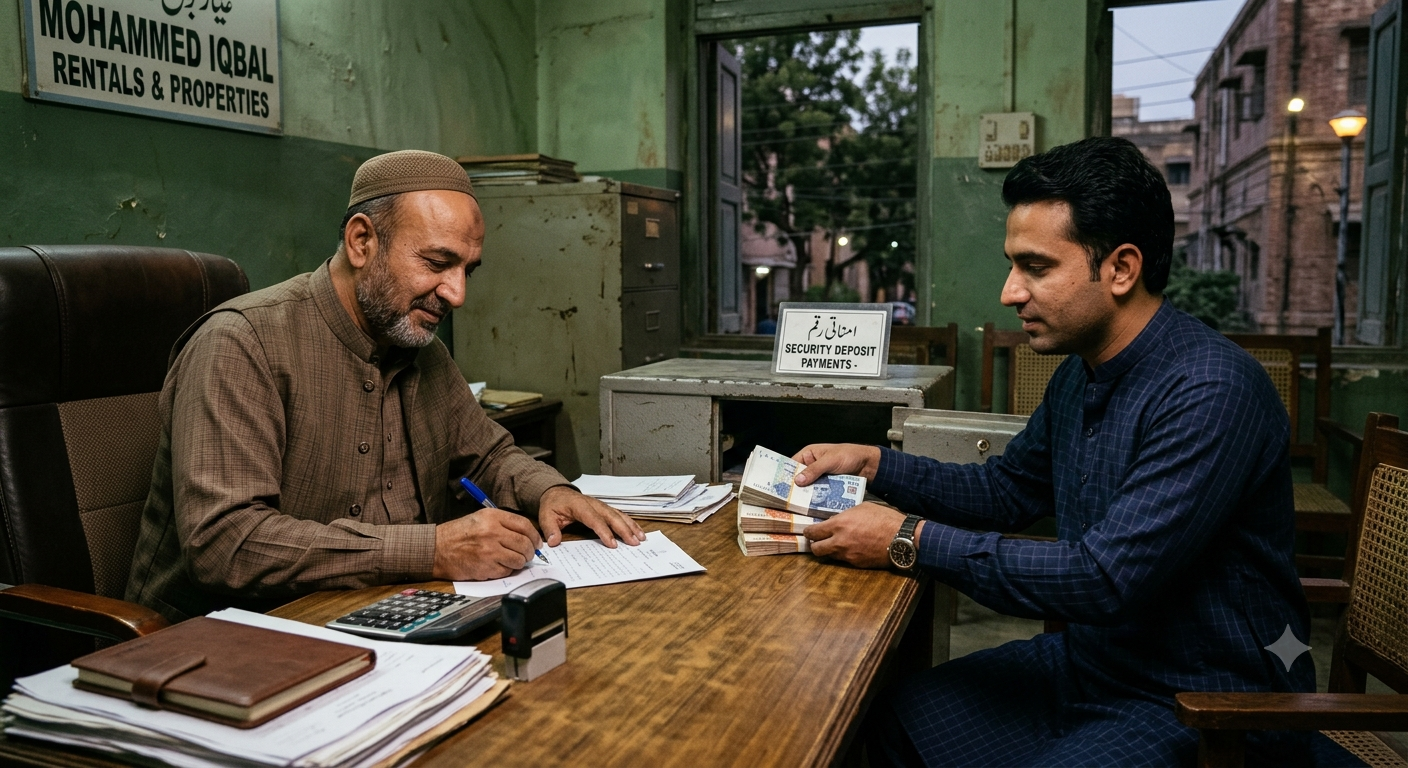
Security deposits are one of the most disputed aspects of renting property in Pakistan — and one of the least clearly regulated. Unlike rent itself, which is capped and controlled under provincial rent statutes, the security deposit rules in Pakistan are largely a matter of contract rather than fixed statutory limits. This creates real uncertainty for both sides: tenants often ask how much security deposit is legal in Pakistan for rent, while landlords and tenants alike frequently end up in dispute when a landlord is not returning a security deposit at the end of a tenancy. This guide explains where the law stands, what protections actually exist, and what to do when a deposit is wrongfully withheld.
Unlike some other jurisdictions that impose a statutory ceiling on deposits (for example, capping deposits at a fixed number of months’ rent), Pakistan has no nationwide legal cap on how much a landlord can charge as a security deposit. None of the provincial rent statutes — the Punjab Rented Premises Act, 2009, the Sindh Rented Premises Ordinance, 1979, the Islamabad Rent Restriction Ordinance, 2001, or the equivalent KP and Balochistan laws — prescribe a maximum deposit amount.
In practice, landlords across Pakistan generally request a security deposit equivalent to one to three months’ rent, though this figure is entirely negotiable and can vary based on the city, the property type, and the relative bargaining power of the parties. Some landlords, particularly for high-value residential or commercial leases, may request more. Because there is no statutory ceiling, the amount agreed in the written tenancy agreement is legally binding — which makes it essential for tenants to negotiate and document this figure clearly before handing over any money.
Practical takeaway: since the law does not cap the amount, the only real protection a tenant has is to ensure the deposit figure, and the conditions for its return, are explicitly written into the tenancy agreement itself.
While the amount of a security deposit is unregulated, several related protections do exist under the provincial rent statutes:
In short: Pakistani rent law does not tell you how much deposit is permissible, but it does give tenants a forum — the Rent Controller or Rent Tribunal — to enforce whatever was actually agreed in writing.
A landlord is generally entitled to deduct from the security deposit:
What a landlord generally cannot do:
A joint inspection of the property at the start and end of the tenancy — ideally documented with photographs and signed by both parties — is the single most effective way to prevent disputes over what counts as damage versus normal wear and tear.
This is one of the most common complaints tenants raise, and Pakistani law does provide a path to recovery — it simply requires the tenant to use the correct forum rather than resorting to self-help.
Formally request the return of the deposit in writing, referencing the tenancy agreement, the date of vacating the premises, and the amount owed. Keep a copy and proof of delivery.
Collect the tenancy agreement, rent receipts, move-in/move-out photographs or inspection notes, and any correspondence with the landlord regarding the property’s condition.
Where the landlord does not respond or refuses to return the deposit without valid justification, the tenant can approach the Rent Controller (Islamabad, Sindh, KP, Balochistan) or Rent Tribunal (Punjab) — the same forum that handles rent and eviction disputes — for an order directing the landlord to return the deposit, or the outstanding balance after lawful deductions.
In some cases, particularly where the dispute is purely about money owed rather than a matter falling squarely within the rent statute’s scope, a tenant may also have recourse to a civil suit for recovery of the amount, though the Rent Controller/Tribunal route is generally faster and more commonly used for straightforward tenancy-related deposit disputes.
Where a landlord’s refusal appears deliberately obstructive, this can be highlighted in the application — Pakistani rent tribunals have shown a willingness to penalise parties who abuse process or advance false pleas to prolong proceedings, a principle recognised, for instance, under the Islamabad Rent Restriction Ordinance, 2001’s provisions on compensation for frivolous or vexatious conduct in rent proceedings generally.
For tenants:
For landlords:
Because Pakistan has no statutory cap or fixed refund timeline for security deposits, the tenancy agreement is, in practice, the primary source of law between the parties on this issue. A vague or missing deposit clause is the single biggest reason these disputes end up contested rather than quickly resolved. Landlords and tenants are both better protected by a clearly drafted clause covering:
The security deposit rules in Pakistan leave more to negotiation than many tenants expect — there is no fixed legal cap on how much security deposit can be charged, and no statutory refund deadline written into most provincial rent laws. What the law does provide is a forum — the Rent Controller or Rent Tribunal — where a tenant facing a landlord not returning a security deposit without justification can seek an enforceable order for its return, provided the underlying agreement and payment are properly documented.
At Jamali Law Associates, we help landlords draft enforceable deposit clauses and help tenants recover deposits wrongfully withheld, including representation before the relevant Rent Controller or Rent Tribunal. If you are involved in a security deposit dispute, our team can advise you on the fastest and most effective route to resolution.
This article is intended for general informational purposes and does not constitute legal advice. For advice specific to your situation, please consult with a qualified lawyer at Jamali Law Associates.