Welcome to Our Law Firm
Mon - Sat 08:00 - 08:00

BY- Admin
September 14, 2026
Comment(0)
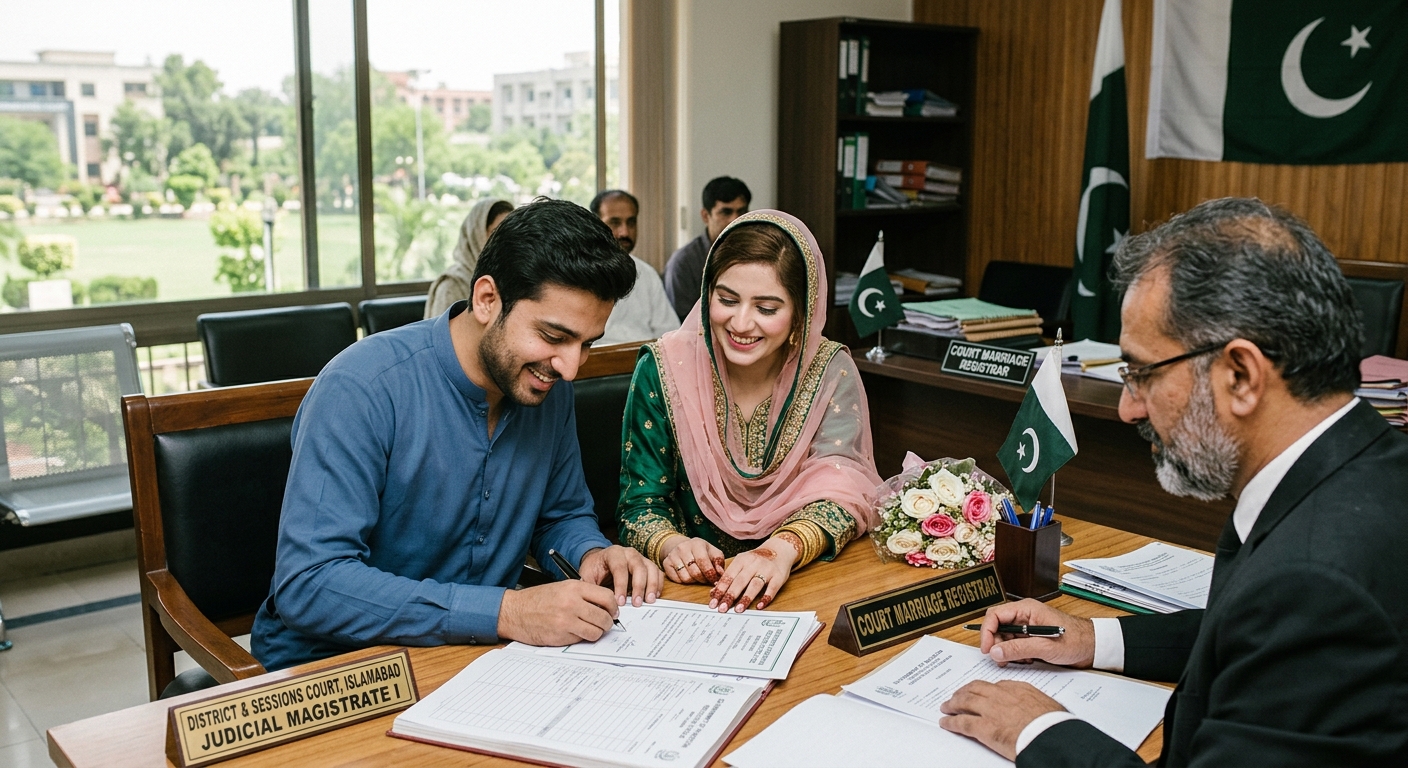
Getting married in Islamabad through the court system is one of the most common ways couples in Pakistan choose to legally register their marriage — especially in cases of love marriage, inter-caste marriage, or when families are not immediately available to conduct a traditional Nikah ceremony. If you are searching for reliable information on court marriage in Islamabad, this guide covers everything you need to know: the legal procedure, required documents, fees, timelines, and how a court marriage lawyer in Islamabad can help you complete the process smoothly and legally.
Jamali Law Associates has helped numerous clients across Islamabad and Rawalpindi complete their court marriage registration quickly, confidentially, and in full compliance with Pakistani family law. This article walks you through the entire process step by step.
Court marriage is not a separate form of marriage under Pakistani law — it is simply the legal registration of a marriage (Nikah) through a lawyer, notary public, or the Union Council, with the involvement of witnesses, an affidavit, and a marriage certificate (Nikah Nama). The term “court marriage” is commonly used in Pakistan to describe a marriage that is solemnized and registered without a large family ceremony, often when the couple wants a quicker, more private, and legally secure route to formalize their relationship.
In Islamabad, court marriage is governed primarily by the Muslim Family Laws Ordinance, 1961, and marriages are registered through the local Union Council after being solemnized by a licensed Nikah Khawan (marriage registrar). A lawyer’s role is to prepare the legal documentation, affidavits, and ensure the marriage is registered correctly so it is recognized by all government departments, including NADRA, passport authorities, and — where relevant — foreign embassies for visa or immigration purposes.
There are several common reasons couples opt for court marriage registration in Islamabad rather than a traditional wedding process:
Pakistani law does not require parental consent for adults (18+ for males, and per recent legal interpretation and CNIC-based age verification for females) to enter into a valid marriage contract. This means a love marriage court in Islamabad is entirely legal, provided both parties are of legal age and enter the marriage with free consent.
Before starting the Islamabad court marriage procedure, both parties must meet the following basic legal requirements:
One of the most searched questions is: what are the court marriage documents required in Islamabad? Here is the standard checklist:
Our office assists clients in preparing all of these documents, including drafting the affidavit and coordinating with the Nikah Khawan and Union Council for same-day processing wherever possible.
Here is how the court marriage procedure in Islamabad typically works when handled through a law firm:
The couple consults a family lawyer to discuss their situation, confirm eligibility, and outline the documents needed. This is also the stage where any concerns — such as court marriage without parents’ consent or objections from family members — are addressed legally.
A legal affidavit is prepared, stating that both parties are entering into the marriage of their own free will, without any pressure or coercion, and that they are of legal age.
A licensed Nikah Khawan solemnizes the marriage in the presence of two witnesses from each side. The Nikah Nama (marriage contract) is signed by both parties, the witnesses, and the Nikah Khawan.
The signed Nikah Nama is submitted to the relevant Union Council in Islamabad for official registration. This step is essential — an unregistered Nikah, while religiously valid, may cause legal complications later for matters like CNIC updates, visas, or inheritance.
Once registered, the couple receives an official court marriage certificate in Islamabad, which is recognized by NADRA and can be used for updating marital status on CNIC, applying for a family passport, spousal visas, and other legal purposes.
With proper coordination, this entire process can often be completed within one to three working days, and in some cases, a same-day court marriage in Islamabad is achievable if all documents are ready in advance.
The Nikah Nama registration in Islamabad is a critical legal step that many couples overlook. A Nikah performed without proper registration can create serious problems later — for example, during visa applications, inheritance claims, or divorce proceedings, where an official government-recognized document is required. A registered Nikah Nama includes important legal clauses covering Haq Mehr (dower), divorce rights, and other conditions agreed upon by both parties, making it far more protective for both spouses than an informal or unregistered ceremony.
Court marriage fees in Islamabad vary depending on the law firm or legal consultant, the complexity of the case, and whether additional services (such as affidavit drafting, Union Council coordination, or expedited same-day processing) are required. Costs typically include:
Because fees can vary case to case, it is best to get a direct quote after a short consultation, especially if your case involves additional complexity such as inter-caste marriage, a second marriage, or documentation needed for an international visa application.
Yes. Under Pakistani law, adults have the legal right to marry a partner of their choice without requiring parental consent. This is a well-established principle upheld by Pakistani courts, including the Lahore High Court and Islamabad High Court, in multiple family law judgments. However, in practice, couples pursuing a court marriage without parents’ consent should still take precautions:
A qualified court marriage lawyer in Islamabad can guide couples through this process while minimizing legal risk and ensuring their marriage is fully protected under the law.
Pakistan does not have caste-based legal restrictions on marriage under civil or Islamic law, so an inter-caste marriage court process in Islamabad follows the same legal steps as any other court marriage. Social or family resistance to inter-caste unions is a cultural issue rather than a legal one, and the law fully protects the right of consenting adults to marry regardless of caste, tribe, or regional background.
For non-Muslim couples or marriages involving parties of different religions, the Special Marriage Act and other relevant personal status laws may apply, and the procedure can differ slightly. It’s advisable to consult a lawyer familiar with these specific legal frameworks to ensure the marriage is registered correctly.
In a small number of cases, especially when a couple has married against family wishes, relatives may approach the police or file a complaint alleging kidnapping, abduction, or coercion. This is one of the most important reasons couples are strongly advised not to skip legal counsel when pursuing a love marriage court process in Islamabad.
To protect themselves, couples can file a writ petition for protection in the Islamabad High Court, requesting that the police and any interfering parties be restrained from harassing or threatening them. This is a well-recognized legal remedy, and courts in Islamabad regularly grant protective orders to adult couples who have married with free consent and can demonstrate the validity of their marriage through proper documentation — which is exactly why a properly drafted affidavit and registered Nikah Nama matter so much.
If you anticipate any resistance from your family or believe there is a risk of a false complaint being filed against you, discuss this with your lawyer at the very first consultation so that protective measures can be arranged proactively rather than reactively.
Many people confuse “court marriage” with an entirely different legal process, when in fact the core religious ceremony (Nikah) is identical. The difference lies mainly in scale, family involvement, and how quickly the legal registration is completed:
| Aspect | Traditional Family Nikah | Court Marriage |
|---|---|---|
| Family involvement | Extensive, often includes large gatherings | Minimal; often just the couple, witnesses, and legal team |
| Timeline | Can take weeks or months to arrange | Often completed within 1–3 days |
| Documentation focus | Sometimes registered later or informally | Registration and affidavit prepared immediately |
| Common use case | Arranged marriages, family-approved unions | Love marriages, urgent registrations, visa needs, privacy-focused couples |
| Legal validity | Valid once registered | Equally valid once registered |
Both routes result in the exact same legally binding marriage once registered with the Union Council — the difference is purely procedural and logistical, not legal standing.
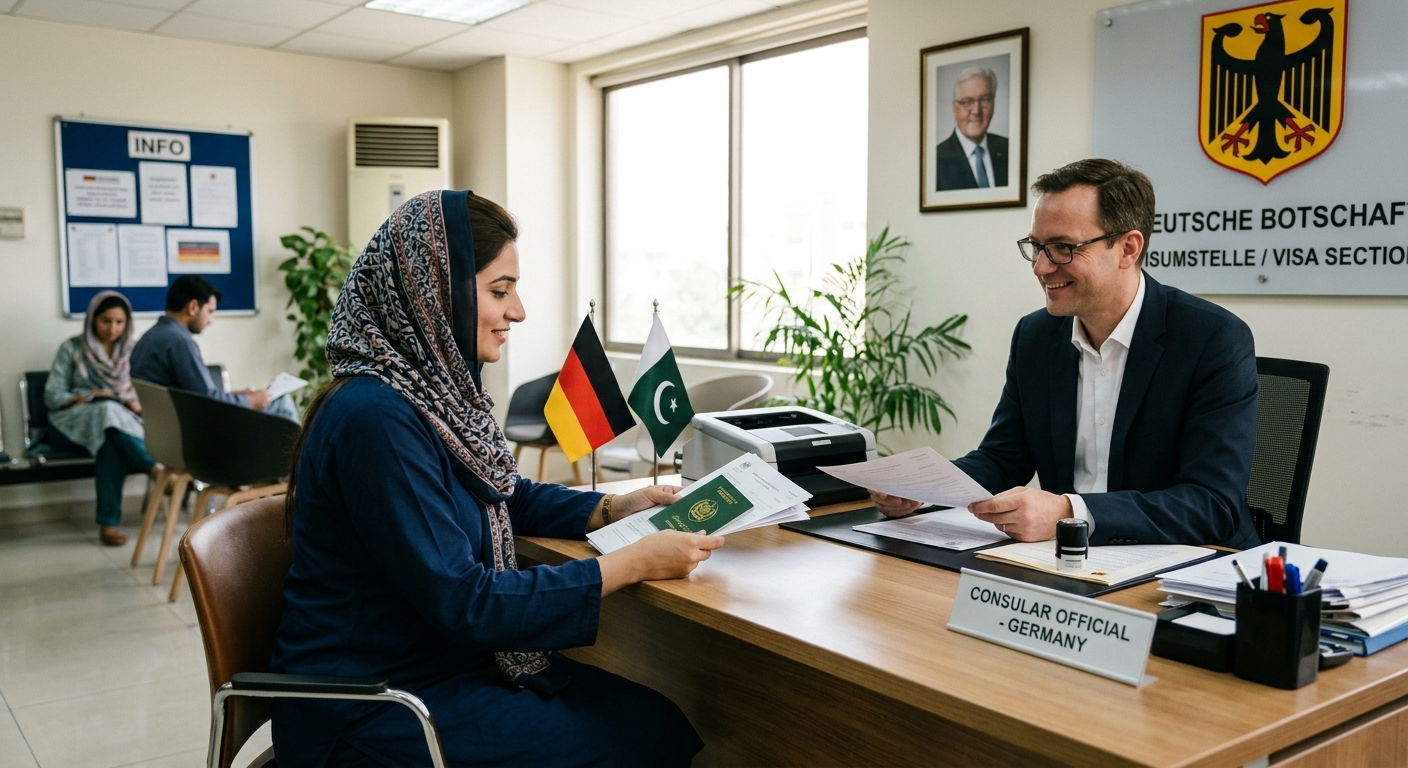
A growing number of clients seek court marriage registration in Islamabad specifically because they need a legally recognized marriage certificate for spousal visa applications, family reunification, or immigration sponsorship abroad. Foreign embassies and immigration authorities typically require:
If your court marriage is intended to support a future visa or immigration application, it is worth mentioning this to your lawyer at the outset, since the documentation can be prepared in a way that anticipates these additional attestation requirements and avoids delays later.
When searching for a “court marriage lawyer near me in Islamabad,” it’s important to choose a lawyer or law firm with direct experience in family law and Union Council registration procedures. A good family lawyer will:
1. How long does court marriage registration take in Islamabad? With complete documentation, registration can often be completed within one to three working days.
2. Can we do a same-day court marriage in Islamabad? In many cases, yes — provided both parties have valid CNICs, witnesses are available, and all required documents are ready in advance.
3. Is court marriage without parents’ consent legally valid in Pakistan? Yes, adults have the legal right to marry without parental consent, and Pakistani courts have consistently upheld this right.
4. What documents are required for court marriage in Islamabad? CNICs of both parties and witnesses, passport-size photos, a signed consent affidavit, and — where applicable — divorce or death certificates of a former spouse.
5. Is a Nikah valid without Union Council registration? Religiously, yes, but for legal purposes such as CNIC updates, passports, and visas, official registration with the Union Council is essential.
6. What are typical court marriage fees in Islamabad? Fees vary by law firm and case complexity; a direct consultation will give you an accurate quote based on your specific situation.
If you are planning a court marriage in Islamabad and want the process handled professionally, confidentially, and without unnecessary delays, our legal team at Jamali Law Associates can guide you from the first consultation through to the final registered marriage certificate.
📞 Contact us today for a confidential consultation on court marriage registration, Nikah Nama documentation, or any related family law matter in Islamabad. 💬 WhatsApp us to book a quick consultation and get your questions answered before you begin the process.
Whether you need help with a straightforward registration or a more sensitive case involving family objections, inter-caste marriage, or urgent visa documentation, our experienced family lawyers are here to help you complete your court marriage smoothly and lawfully.