Welcome to Our Law Firm
Mon - Sat 08:00 - 08:00

BY- Admin
November 18, 2026
Comment(0)
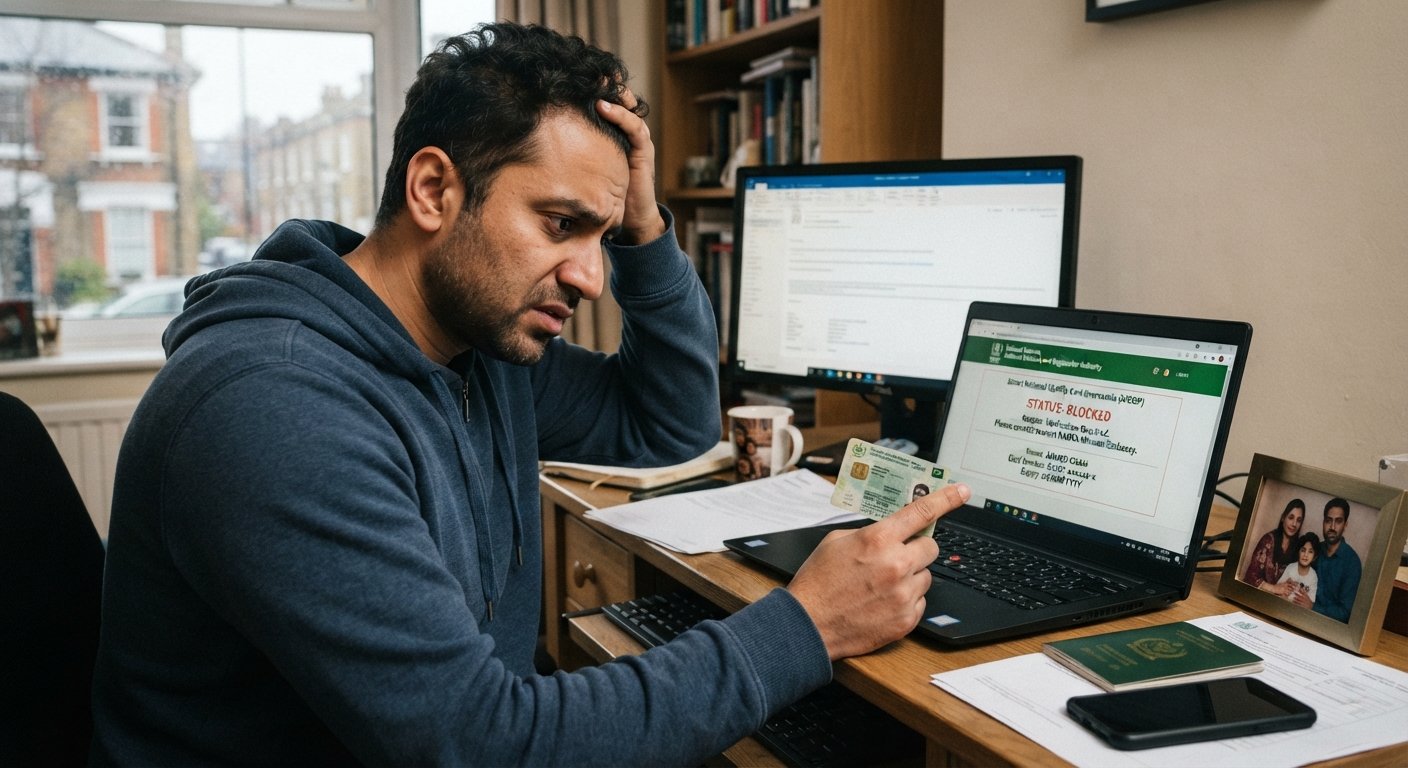
Millions of overseas Pakistanis own land, houses, shops, bank accounts or business interests back home, and many of them cannot travel to Pakistan every time a legal or official matter comes up. The most practical solution is a power of attorney (POA): a legal document that lets a person you trust act on your behalf in Pakistan.
But a power of attorney sent from abroad is not just a piece of paper. If it is prepared incorrectly, it can be rejected by the Sub-Registrar, the bank or the court. If it is written too broadly or given to the wrong person, it can lead to fraud and expensive disputes. This guide explains, step by step, how to give a power of attorney from abroad to Pakistan, what options you have, what documents you need, and how to protect yourself.
A power of attorney is a written authority in which one person, called the principal (or executant), gives another person, called the attorney or agent, the right to do certain acts on their behalf. The attorney can sign, appear, submit documents or make decisions only within the powers written in the document.
For an overseas Pakistani, a POA is commonly used to:
A general POA gives the attorney wide authority over many matters. It is convenient, but it carries the highest risk if the attorney is dishonest, and some offices do not accept it for important transactions such as selling land.
A special POA authorises the attorney to do specific acts, such as selling one named plot or appearing in one particular case. It is generally safer and is usually preferred by Sub-Registrars, banks and courts.
Our practical advice: wherever possible, use a special power of attorney that names the exact property, case or task, instead of an open-ended general one.
You can appoint any adult of sound mind whom you trust, such as a brother, parent, relative, close friend or a lawyer. Choose carefully. The attorney will be able to act with your authority, so a person with a bad history, financial pressure or a conflict with you is a risk.
Some overseas Pakistanis appoint a lawyer as attorney for court matters, and a family member for day-to-day property matters. Separate documents for separate purposes can be safer than a single document with all powers.
There are generally three practical routes. Which one is available to you depends on your country of residence and your nationality.
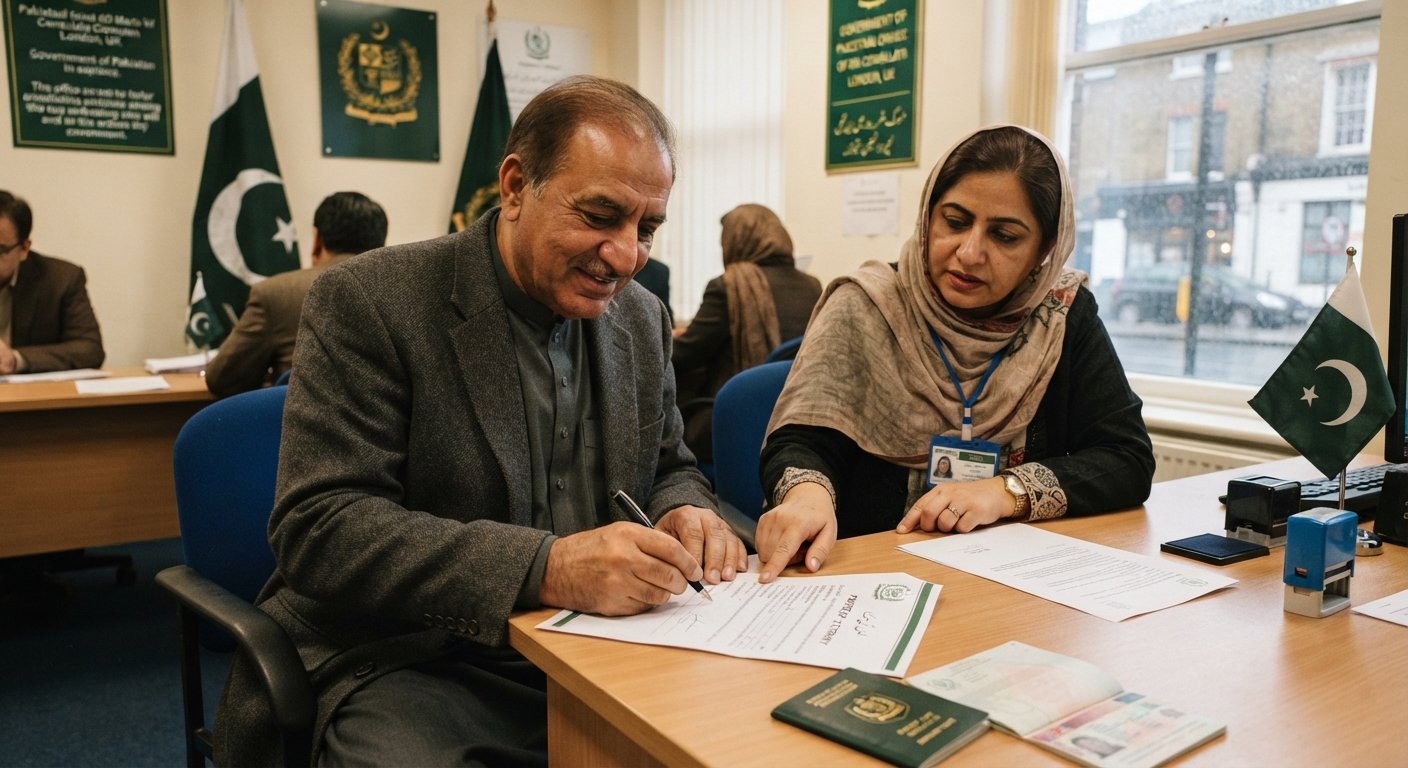
This is the most common route. You prepare the POA, then sign it in front of an authorised consular officer at the Pakistani embassy, high commission or consulate that covers your area. The mission attests your signature and identity. Some missions require an appointment, and many require you to appear in person.
The documents usually required are:
Because each mission publishes its own instructions, always check your embassy or consulate’s website first.
Pakistan has introduced an automated, digital power of attorney service for overseas Pakistanis, developed by NADRA with the Ministry of Foreign Affairs. It allows eligible applicants to apply online from home, verify identity digitally, and complete an online interview with the mission, instead of travelling to the embassy.
Points to know:
Check whether the digital option is available for your country and your nearest mission, because availability and fees change.
Some applicants sign before a local notary in their country and then obtain an apostille from the competent authority there. Pakistan has acceded to the Hague Apostille Convention, and the Ministry of Foreign Affairs now handles apostille as well as ordinary attestation. However, the rules about which route is accepted for a power of attorney meant for use inside Pakistan depend on the receiving office and on current procedures.
Before choosing this route, confirm with the Pakistani mission and with the office where the POA will be used (for example, the Sub-Registrar or the bank) that it will be accepted. Using the wrong route is one of the most common reasons for rejection.
Write down exactly what you want the attorney to do: sell a particular house, appear in a named case, collect rent, handle a bank account, or complete inheritance mutation. The clearer the purpose, the safer and more acceptable the document.
Decide between a special and general POA, and select a trustworthy attorney. Collect the attorney’s full name, father’s name, CNIC number, address and contact details.
A POA should be drafted in clear legal language, by a lawyer if the matter is important (such as property sale or a court case). A well-drafted POA normally contains:
A lawyer in Pakistan can also tell you what wording the local office, bank or court prefers, which saves repeated corrections.
Depending on the purpose and the office, the POA may need to be prepared on stamp paper or in a particular format, and stamp duty rules vary by province and by the type of document. Some missions allow you to print the document on plain paper for attestation. Ask the mission and your lawyer before printing.
Sign the document in the presence of the consular officer (or complete the digital process), along with the identity documents requested. Do not sign it in advance, and never sign a blank or incomplete document.
Once the mission attests the POA, it is ready for use in Pakistan. In many cases, the POA must then be authenticated or processed by the Ministry of Foreign Affairs in Pakistan, or by the relevant authority, before it is registered or used. The MOFA publishes standard procedures for documents, including powers of attorney that originate from abroad for use in Pakistan, so check the current instructions.
Send the original attested POA to your attorney or your lawyer by a trackable courier, and keep scanned copies. The original is needed for registration or submission.
For property transactions, the POA is usually presented to the Sub-Registrar or the relevant registration office, and in some cases registered, before it can be used in a sale or transfer. Public sources state that attestation by the mission commonly remains valid for a limited period (often cited as about six months) within which the next step must be completed, so do not delay. Confirm the current rule with your lawyer.
Costs and timelines depend on your country, the mission, whether you use the digital route, and local notary, courier and stamp charges in Pakistan. Embassy fees and digital service charges are listed on the mission’s website and can change, so check before you apply. As a practical estimate, allow one to four weeks from the start of the process to the arrival of the original document in Pakistan, and longer if appointments are limited.
Power of attorney misuse is one of the most common causes of property disputes involving overseas Pakistanis. Take these precautions:
A power of attorney can usually be cancelled by the principal at any time, unless it is part of a binding arrangement. Typically, you need to:
A POA generally ends automatically when the principal dies, and the attorney’s authority does not continue with the heirs unless a new legal authority is given. If a POA is being misused, act immediately and speak to a lawyer, because delay can make recovery more difficult.
Possibly. Pakistan has an online, digital power of attorney service for eligible overseas Pakistanis in selected countries, so check your nearest mission. Otherwise, in-person attestation is normally required.
A lawyer is not always legally required, but it is strongly recommended for property, inheritance and court matters, because wrong wording can cause rejection or misuse.
Usually yes, because it limits the authority to a specific task and is more widely accepted by registration offices and courts.
The POA’s own validity depends on what it says. The attestation by a mission is often reported to be valid for a limited period for the purpose of registration (commonly about six months), so confirm with your lawyer and the receiving office.
Yes, but the procedure may differ. Foreigners usually need to have their documents attested by their own country’s authorities and then by the Pakistani mission, and the digital option may not be available to them.
Only if the POA clearly gives that power, and if the document meets the registration office’s requirements. This is why a special POA for sale is important.
The authority of the attorney generally ends with the principal’s death. Your legal heirs would then have to act through succession and inheritance procedures.
Yes. You can execute a revocation deed through the same attestation process, notify the attorney and inform the offices where the POA was used.
Only if the POA gives the power to appoint a substitute. If you do not want that, say so in the document.
Giving a power of attorney from abroad to Pakistan is a practical way to manage your affairs, but it works well only when it is properly drafted, correctly attested, given to a trusted person and limited to what you really need. Decide your purpose first, prefer a special power of attorney, use the embassy or the digital service according to what is available to you, and keep control of the original document and the proceeds of any transaction. Always confirm the current rules with your Pakistani mission and the office where the document will be used, because procedures and fees change.
If you need a power of attorney drafted for property, inheritance, court or business matters, or you want an existing POA reviewed or cancelled, Jamali Law Associates can guide you from drafting to registration in Pakistan.
Disclaimer: This article is for general information and is not legal advice. Procedures, fees and availability of digital services differ by country and mission and change over time. Always confirm the current requirements with the Pakistani embassy or consulate and seek legal advice on your specific situation.