Welcome to Our Law Firm
Mon - Sat 08:00 - 08:00

BY- Admin
November 18, 2026
Comment(0)
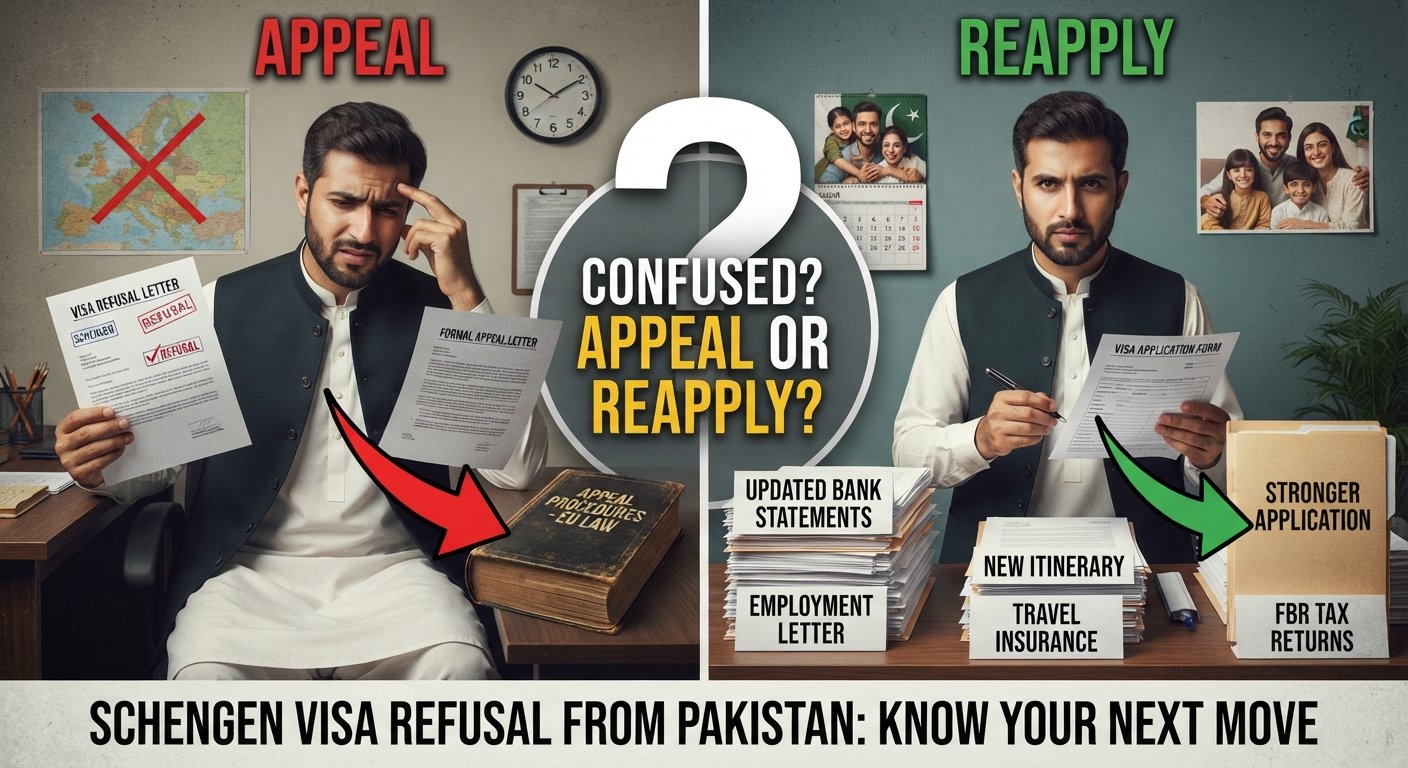
Getting a Schengen visa refusal letter is stressful, especially after weeks of preparation, appointment fees and travel plans. The good news is that a refusal is not the end of the road. You generally have two options: appeal the decision or submit a fresh application. Choosing the wrong one can cost you time, money and, in some cases, your chance to challenge the decision at all.
This guide explains how both options work, how to decide between them, and what to do step by step. It is written for applicants in Pakistan, but the principles apply to most Schengen visa refusals.
Under the EU Visa Code, every refusal must be given to you in writing, using a standard form. That form shows the reasons for the refusal (usually as ticked boxes) and explains who you can appeal to and how.
A few important points to understand first:
The two options are very different in nature:
There is no single EU appeals office. The Visa Code gives you the right to appeal, but the procedure, the deadline, the authority and sometimes the language and fees are decided by the national law of the country that refused you. A refusal from Spain, one from France and one from the Netherlands may follow completely different routes.
An appeal is usually worth considering when:
An appeal can be slow, and success rates are not high in most countries unless there is a clear legal or factual error. Appealing without a specific argument is usually a poor use of time.
Reapplying is often the faster and more practical option when:
There is no mandatory waiting period after a refusal. However, reapplying immediately with the same documents is almost always a waste of money. The consulate will see the earlier refusal in VIS and expects you to have addressed its reasons.
| Appeal | Reapply | |
|---|---|---|
| What it challenges | The old decision | Nothing, it is a new file |
| Best when | Clear error by the consulate | Problem can be fixed with better documents |
| Deadline | Strict, set by national law (often 1 to 2 months) | None |
| Cost | Often no consulate fee, but legal help and translations may cost | €90 fee plus service charge again |
| Speed | Can be slow | Usually faster |
| Risk | Missing the deadline loses the right | Repeating the same weak file gives the same result |
Your refusal form lists reasons, usually by ticked boxes. The most common ones for applicants from Pakistan are:
Understand the exact boxes ticked in your letter. Your choice between appeal and reapply depends on them. If the problem is document quality, you will usually need to reapply. If the problem is a mistake by the consulate, an appeal may be appropriate.
Check which reasons are ticked, the authority named for the appeal, and the deadline. Do not rely on a general article, including this one, for the deadline. The date in your letter is the one that counts.
Deadlines are often short. Depending on the country, they can range from about a month to two months, and some countries are stricter than others. Missing the deadline usually means losing the right to appeal.
The route depends on the country that refused you. Typical examples are:
These examples are general and national rules change. Always follow your own refusal letter and the current guidance of the refusing country.
Gather the full copy of your original application, the refusal letter, the passport, and the documents that prove the consulate was wrong or missed something.
A good appeal letter is short, factual and structured. It should include:
Avoid emotional language, long life stories and accusations. Judges and officials read facts and evidence.
Some countries require the appeal in their official language, or with certified translations. Others accept English. File exactly as the letter says (by post, email, in person or through a lawyer) and keep proof of filing.
No appeal decision means you do not have permission to travel. Do not book non-refundable tickets until the decision is in your hand.
Match every ticked reason to a real problem in your file. Be honest about it. If you cannot fix the issue, a second application may fail in the same way.
Do not hide the refusal. State it, and briefly explain what has changed or been corrected since. Consulates can see it in VIS, and honesty protects your credibility.
Apply to the country of main destination or, if you visit several countries, the one where you will spend the most nights. Changing the country just to avoid the earlier refusal is not a safe strategy, and the new consulate can still see the record.
Expect to pay the full visa fee and the visa centre service charge again. Allow extra time, because appointment availability in Pakistan can be limited.
In many cases you can do both, but it needs care. If you have a strong legal argument and also need to travel soon, you may file an appeal to protect your rights and submit a stronger new application in parallel. Do not make statements in one that contradict the other. A lawyer can help you structure both so they stay consistent.
Fees can change, so confirm the current amounts on the official website of the embassy or visa centre before paying.
Consider consulting a lawyer if:
A lawyer can review the refusal reasons, tell you honestly whether to appeal or reapply, and prepare a legally sound appeal or a stronger new file.
Yes. There is no mandatory waiting period. But you should only reapply once you have addressed the reasons for the refusal.
It depends. If the consulate made a clear mistake, appeal can be effective. If the problem is weak documents or unclear purpose, reapplying with a corrected file is usually faster and more practical.
The refusal is stored in the Visa Information System and can be seen by other Schengen consulates. It is not a permanent ban, but you should be consistent and honest in later applications.
The deadline is set by the refusing country’s national law and stated in your refusal letter. It is often between about one and two months, and sometimes shorter. Check your letter immediately.
No. The original visa fee and the service charge are not refunded. A reapplication requires paying the fees again.
You can, but the earlier refusal is visible in VIS, and you must still apply to the country that is your genuine main destination. Choosing a country only to avoid scrutiny is risky.
Not automatically, but repeated refusals with the same reasons make the next application harder. Each new attempt should show clear improvement.
No. An appeal does not give you permission to travel. You need the visa itself.
A Schengen visa refusal is a setback, not a final verdict. Appeal when the decision contains a clear error or ignored evidence, and act quickly, because deadlines are strict. Reapply when the weakness was in your file and you can honestly fix it. In every case, start with the refusal letter, be truthful, keep your documents consistent and avoid rushing a second application.
If you want an expert review of your refusal letter, Jamali Law Associates can help assess whether an appeal or a new application is the stronger option for your situation.
Disclaimer: This article is for general information and is not legal advice. Visa rules, fees and appeal procedures change and differ by country. Always follow the instructions and deadlines in your own refusal letter and check the current official guidance of the relevant embassy or consulate.