Welcome to Our Law Firm
Mon - Sat 08:00 - 08:00


BY- Admin
November 18, 2026
Comment(0)
Finding out that your CNIC or NICOP is blocked is a nightmare for any overseas Pakistani. You may only find out when your passport renewal is refused, a bank rejects your transaction, a property transfer stops, or the airline will not let you board a flight to Pakistan. And because you are thousands of miles away, it is hard to know where to start.
This guide explains what a blocked CNIC actually means, the most common reasons it happens, what to do first, how the unblocking process generally works, and what legal options are available if NADRA does not resolve the problem.
People use “blocked” for several different situations. The status on NADRA’s system may be described as blocked, suspended, impounded, under verification or on hold. In practice, they all mean that your identity card cannot currently be used or renewed normally until NADRA clears the issue.
It is important to understand that this is usually an administrative flag, not a punishment or a court judgment. Something in your record has raised a question, and NADRA wants it verified or corrected. That is good news in one sense: most problems can be resolved if the real cause is identified and the right documents are provided.
NADRA does not usually explain the reason in a simple message, which is why applicants are confused. Based on public reporting, court cases and common client experiences, these are the main causes.
Identity documents are issued for a fixed period, and the holder is responsible for renewing them on time. In April 2026, NADRA publicly warned that a very large number of CNICs were at risk of being blocked because they had not been renewed. For overseas Pakistanis, an expired or invalid NICOP now has serious consequences: in July 2026, reports said airlines were directed not to board passengers on an expired, cancelled or invalid NICOP, unless they hold the right Pakistani visa.
One of the most common causes is a mismatch or doubt in the family record. If the details of parents, siblings or the family tree do not match NADRA’s records, or if a relative’s record has been flagged, your card can be placed under verification. In some reported court cases, the blocking of one family member’s card was followed by the blocking of other family members’ cards.
NADRA and the government have carried out re-verification programmes in the past, targeting cards suspected to have been obtained wrongly or on incorrect information. Some genuine citizens were caught in these drives, and had to prove their status afterwards.
Having more than one CNIC or NICOP record, or having a record that overlaps with another person’s data, can lead to blocking until the duplicate is resolved.
Differences in name spelling, date of birth, father’s name or place of birth between CNIC, passport, birth certificate and other documents are a frequent trigger, especially for people who changed documents abroad over the years.
Many overseas Pakistanis hold a foreign passport. NICOP and Pakistan Origin Card rules, and records relating to foreign nationality, can cause problems if the information on file is outdated or inconsistent.
If NADRA believes the card was issued on incorrect or false documents, the card can be impounded for investigation. Applicants should take this very seriously, and should never answer it with fabricated documents.
A complaint from a third party, an inquiry by an authority, or another official direction can also lead to a block. In some cases, a pending or earlier criminal matter plays a role.
Sometimes the cause is a simple clerical or technical error. This is rarer, but it does happen, and it is another reason to first find out exactly what NADRA’s record says.
A blocked identity card can affect many parts of your life:
The exact process depends on the reason for the block and NADRA’s current procedures, which change from time to time. The steps below show the general approach.
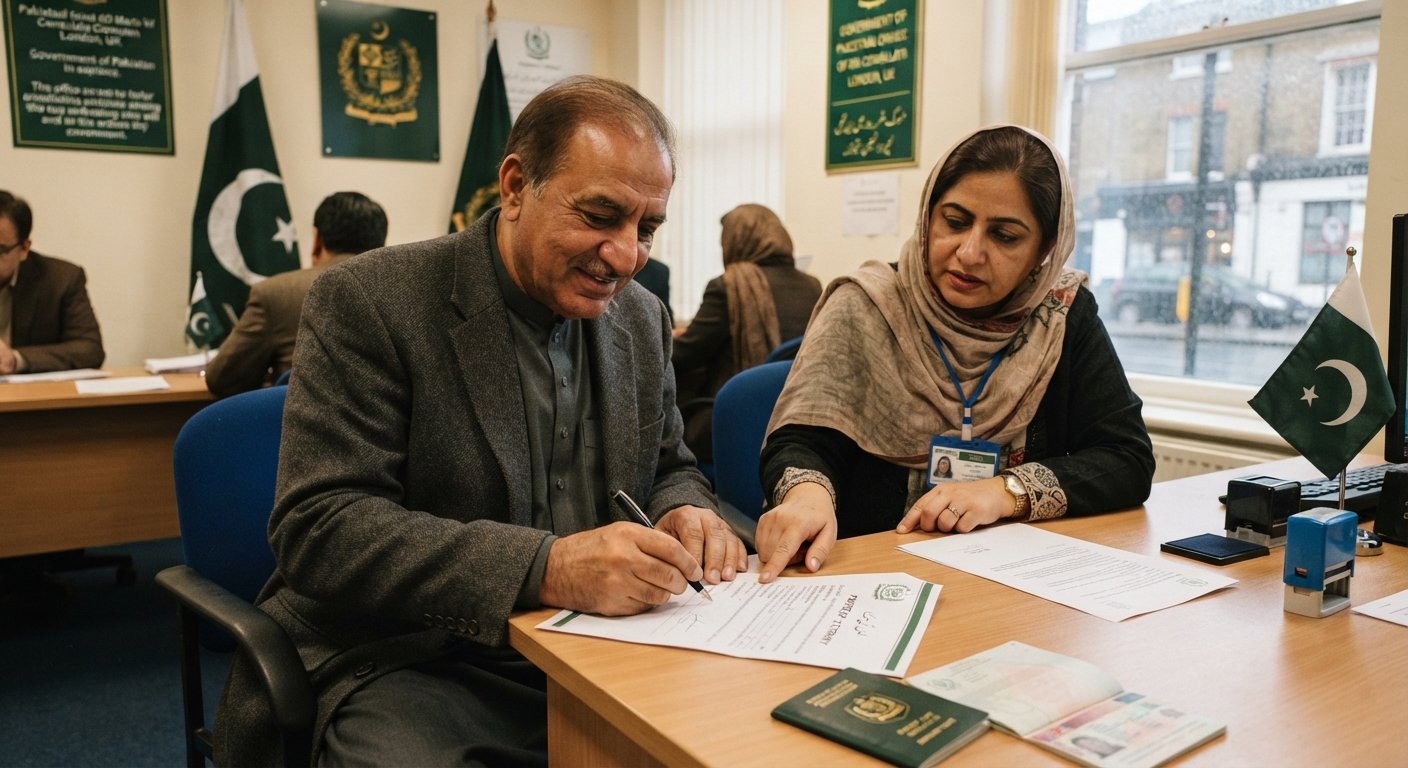
Try to find out the exact status through NADRA’s official channels: the Pak Identity online portal and mobile app, NADRA’s helpline, or the NADRA desk at your nearest Pakistani embassy or consulate. Note down the status, the date, and any reference number. Ask, if possible, for the reason in writing.
Be careful about “agents” on social media who promise to unblock a card quickly for money. Do not give your documents, passwords or fees to anyone you cannot verify.
If your CNIC or NICOP is expired, the first step is renewal. NADRA has said that overseas Pakistanis can apply for or renew identity documents, including NICOP and Pakistan Origin Card, through the Pak-ID mobile app and online portal. If the card is blocked, though, the renewal may not go through until the block is cleared, and you may be told to apply for verification.
Be ready with documents that prove your identity, citizenship and family relationships. These commonly include:
Documents issued abroad may need attestation, and documents in a foreign language may need translation. Confirm what is required before spending money on attestation.
The usual options are:
In many verification cases, NADRA asks for a personal verification or a hearing, and sometimes a family member’s visit. Overseas applicants should ask the NADRA desk whether this can be done through the consulate or through a representative.
If NADRA asks for further documents or an explanation, reply within the time given. A delayed response is a common reason why a case stays pending for months.
Save application numbers, tracking IDs, receipts, emails and the names of officials you spoke to. If you later need to go to court, this record becomes your evidence that you tried to solve the issue.
If there is no progress, send a written reminder to the relevant NADRA office, and if there is still no resolution, a formal complaint to a senior authority. Always keep a copy.
If NADRA does not decide your case, refuses without a reason, or keeps your card blocked for an unreasonably long time, a legal remedy may be necessary.
In Pakistan, reported judgments of the High Court, including the Sindh High Court, have repeatedly dealt with blocked or impounded CNICs. The arguments made in these cases, and the way courts have approached them, include the following:
These are general observations from reported cases. The outcome of your own case depends on the facts, and a court usually does not simply order an automatic unblocking. More often, it ensures that NADRA decides lawfully and quickly.
The common remedy is a writ petition in the High Court under Article 199 of the Constitution against NADRA, asking the court to direct NADRA to process, decide and, if the petitioner is a genuine citizen, unblock or renew the card.
Yes, in practice. A petition can be filed through a lawyer in Pakistan, using a properly executed and attested power of attorney from abroad, along with the necessary supporting documents. Because rules about attestation and apostille apply to documents executed abroad, a lawyer can advise on the right format for your country.
There is no single timeline. A simple document correction may be resolved in weeks. A citizenship or family verification case can take months, especially if hearings or field verification are needed. A court case adds time, but it can create a legal deadline for NADRA to decide. For this reason, start the process as soon as you find out.
In many cases the process can be started from abroad, through NADRA’s online services or a Pakistani mission. Some cases may need a personal verification or a representative in Pakistan.
Blocks are often applied on the basis of an internal flag, such as expiry, record mismatch or verification. NADRA does not always send a detailed explanation. You may need to ask in writing.
Not necessarily. Blocking or impounding usually means the card is on hold pending verification. Cancellation is a final step with different consequences. Ask NADRA for the exact status.
There are strict rules. In 2026, reports said airlines were told not to board overseas Pakistanis on an invalid NICOP unless they hold a valid Pakistani visa. Check the latest rules with the airline and the embassy before booking.
A lawyer cannot unblock it directly. A lawyer can help you prepare documents, draft the application to NADRA, and, if needed, file a petition so that the court directs NADRA to decide your case within a time limit.
Often yes, with a proper authority letter and documents. Check the NADRA office’s requirements.
Not always. Courts commonly direct NADRA to decide the matter lawfully and quickly. If NADRA verifies your status, the card is cleared.
No. In most cases it is an administrative verification issue. Only a lawyer reviewing your specific situation can tell you whether there is a criminal or inquiry angle.
A blocked CNIC or NICOP is stressful, but it is usually solvable if you act in an organised way: find out the real reason, renew if the card has expired, gather proof of your identity and family, file your application through the right channel, and keep a complete record. If NADRA does not decide your case or refuses without a clear reason, the High Court route is available, and courts have emphasised due process and reasoned decisions.
If your CNIC or NICOP has been blocked and you are living abroad, Jamali Law Associates can review your documents, prepare the application to NADRA, and advise whether a petition in the High Court is necessary.
Disclaimer: This article is for general information and is not legal advice. NADRA procedures, fees and policies change, and every case depends on its own facts. Always confirm the latest requirements with NADRA and the relevant Pakistani mission, and seek legal advice on your specific situation.